
How Do Chiropractors Assess Posture and Spinal Alignment?
Learn how chiropractors evaluate posture and spinal alignment—and how those findings guide personalized chiropractic care.

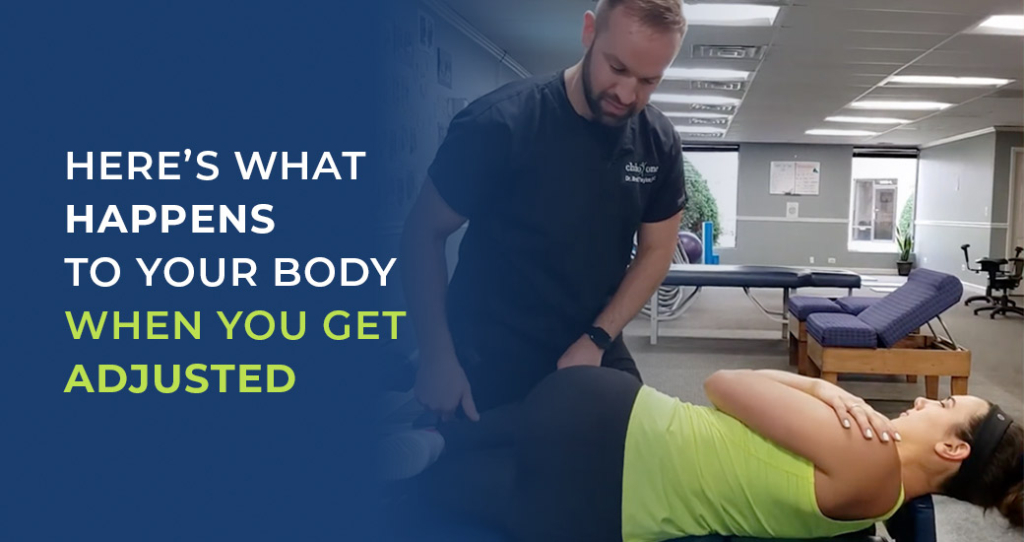
A chiropractic adjustment applies a precise, controlled force to a restricted joint, which restores normal motion, reduces local inflammation, and improves nervous system communication.1 By correcting this alignment, the body experiences decreased mechanical stress and muscle tension, which often provides immediate relief and improved mobility.
If you’ve ever left a chiropractic appointment feeling lighter, looser, or noticeably less tense, you’re not alone. After all, there’s a reason so many people love chiropractic care. Many patients report fast relief after an adjustment, which naturally leads to an important question: what is actually happening beneath the surface?
Understanding how chiropractic adjustments work can help you feel more confident in your care, especially if you’re dealing with symptoms like back pain, stiffness, or limited mobility.
A chiropractic adjustment is a precise, controlled movement applied to a joint—most often in the spine—that isn’t moving as well as it should. These areas of restricted or altered motion are sometimes referred to as spinal joint dysfunction.
When joints in the spine don’t move properly, they can contribute to symptoms such as:
Chiropractic adjustments are commonly used as part of care for [back pain], especially when pain is related to posture, repetitive movement, or prolonged sitting. At Chiro One, adjustments are performed gently and specifically, based on a thorough assessment of how your body moves and functions—not just where it hurts.
Your spine does more than support your posture—it also protects the nervous system, which helps coordinate movement throughout your body.
When spinal joints aren’t moving efficiently, nearby muscles may tighten to compensate, movement patterns can become inefficient, and pressure or irritation around spinal nerves may increase.
“During a chiropractic adjustment, we aren’t just treating a symptom—we are applying a precise force to a restricted joint to restore normal motion and improve how your nervous and musculoskeletal systems communicate. When joints move properly, surrounding muscles can finally relax, allowing the body to perform at its full potential.” — Dr. Jack Lambert, D.C.
A chiropractic adjustment helps restore normal joint motion. This can:
The goal isn’t just short-term relief, but improved function that helps your body move more comfortably over time.
Sometimes—but not always—you may hear a popping or cracking sound during an adjustment. This sound is simply the release of gas (such as oxygen or nitrogen) from within the joint as pressure changes. 2
Important things to know:
There are also chiropractic techniques that use instruments or very gentle pressure instead of manual adjustments. The method used depends on your needs, comfort level, and health history.
Many patients notice improvement shortly after an adjustment, especially when restricted joints begin moving more freely again. Improved joint motion can reduce stiffness, improve mobility, and naturally alter how the central nervous system processes pain signals. 3
That said, fast relief doesn’t always mean the issue is fully resolved. While adjustments help restore movement, supporting muscles and connective tissues often need to be retrained to help maintain those improvements. That’s why care at Chiro One often includes in-clinic [active therapies and movement-based exercises] alongside adjustments—to build strength and stability that supports long-term results.
Mild soreness can occur, particularly after your first few visits. When it does happen, it often feels similar to post-workout soreness and usually resolves within a day.
Helpful tips if you feel sore:
Soreness isn’t required for care to be effective, and many patients don’t experience it at all.
There’s no one-size-fits-all answer. Frequency depends on your symptoms, how long you’ve been dealing with them, your movement patterns, and your personal goals. After a comprehensive exam, your chiropractor will recommend a personalized care plan designed to support both immediate relief and long-term function.
Chiropractic care isn’t only for people in severe pain. Many patients seek care to manage stiffness, [improve posture], move more comfortably at work, or support overall spinal health. At Chiro One, care plans are built around how your body moves—combining adjustments with movement-focused therapies to support better outcomes.
When a spinal joint loses its normal motion or alignment, it can create localized inflammation that irritates nearby nerve roots (often referred to as a “pinched” or “trapped” nerve). An adjustment restores joint mobility, which helps reduce this surrounding inflammation and relieves the pressure placed on the nerve.
Feeling fatigued after an adjustment is a normal response known as “toxic release” or simply neurological adaptation. As your body adjusts to its new alignment and muscle tension releases, your nervous system processes a surge of new sensory information, which can temporarily leave you feeling sleepy as your body heals.
While light movement like walking is highly encouraged to help your body adapt to its new alignment, it is generally recommended to avoid heavy lifting or high-intensity workouts immediately following an adjustment. Your muscles and joints need time to stabilize in their newly restored positions.

Subscribe and get news, articles & offers sent right to your inbox each month.
"*" indicates required fields
By subscribing you are agreeing to the Terms and Conditions and Privacy Policy.
Learn how chiropractors evaluate posture and spinal alignment—and how those findings guide personalized chiropractic care.

Explore how chiropractic care offers drug-free pain relief and a safe alternative to opioids; schedule your Chiro One appointment today.

See how chiropractic care is increasingly integrated into mainstream healthcare with MDs, PTs and wellness providers for collaborative, patient-centered treatment.