
The Importance of Ergonomics: Posture Tips for Work and Play
Ergonomics reduces stress on muscles and joints. Learn how posture tips for home offices and gaming chairs support spinal health and wellness.

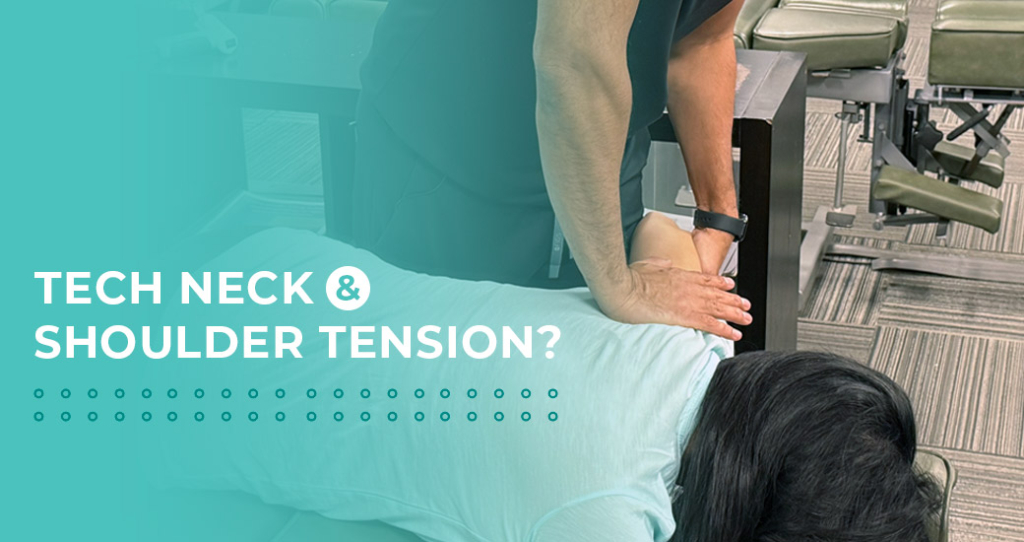
Yes, chiropractic care can effectively relieve tech neck and shoulder tension by improving spinal mobility, reducing joint restrictions, and addressing the muscle imbalances caused by prolonged screen use. 1 At Chiro One Wellness Centers, care plans often combine gentle chiropractic adjustments with movement-based therapies and posture education to address both symptoms and underlying causes.
Tech neck and shoulder tension are common, especially among people who spend hours each day on computers or mobile devices. When left unaddressed, this pattern can contribute to chronic stiffness, headaches, and a reduced range of motion.

Tech neck refers to pain and stiffness in the neck, shoulders, and upper back caused by sustained forward head posture during screen use. In many cases, this posture increases mechanical strain on the cervical spine and surrounding muscles. 2
Over time, these factors can lead to muscle guarding, joint restriction, and persistent tension across the shoulders and neck. Learn more about the connection between your posture and chronic pain.

Chiropractic care focuses on restoring normal motion to the spine and supporting healthy movement patterns. For tech neck and shoulder tension, this approach may help in several ways:
“I believe that informed patients achieve better outcomes. Addressing tech neck isn’t just about relieving the tension you feel today—it’s about educating you on your workstation setup and daily habits, empowering you with the tools you need to prevent that pain from returning.” — Dr. Robert Aarestad, Chiro One of Peoria
Restricted joints in the neck and upper back can limit movement and increase muscle tension. Gentle chiropractic adjustments are designed to restore motion to these areas, which may reduce stiffness and improve comfort.
When joints are not moving well, nearby muscles often work harder to compensate. Addressing joint restriction can help decrease excessive muscle activation in the neck and shoulders.
The spine plays a key role in nervous system communication. Improving spinal mechanics may help the body better regulate muscle tone and movement coordination. 3 Wondering how it works? Discover exactly what happens during a chiropractic adjustment.
Many people try to manage tech neck with stretching alone. While stretching can be helpful, it does not always address the underlying joint and movement issues.
In clinical settings, patients often respond best when chiropractic care is combined with active therapies and posture education.
At Chiro One Wellness Centers, care for tech neck and shoulder tension is personalized and movement-focused.
This whole-body approach is designed not just to relieve tension, but to help prevent it from returning.
Chiropractic care may be especially helpful for office professionals and remote workers, students and frequent mobile device users, people with recurring neck or shoulder stiffness, and individuals experiencing tension headaches related to posture. Care plans are always adjusted based on health history, symptoms, and individual goals.
Chiropractic care is not a one-size-fits-all solution. People with certain medical conditions, recent trauma, or specific spinal pathologies may need additional evaluation or alternative care. A thorough assessment helps determine whether chiropractic care is the safest and most appropriate next step.
In many cases, yes. Chiropractic care can help address joint restriction and muscle tension associated with prolonged screen use, especially when combined with movement and posture guidance.
Chiropractic care is generally considered safe for most people with mechanical neck and shoulder pain when provided by a licensed chiropractor. Care plans are individualized based on age, health history, and symptoms.
Some patients notice improvement within a few visits, while others require a longer care plan. Response depends on posture habits, severity of tension, and consistency with recommended exercises.
Yes. Chiropractic care works best when paired with posture awareness and movement changes that reduce daily strain on the neck and shoulders.

Subscribe and get news, articles & offers sent right to your inbox each month.
"*" indicates required fields
By subscribing you are agreeing to the Terms and Conditions and Privacy Policy.
Ergonomics reduces stress on muscles and joints. Learn how posture tips for home offices and gaming chairs support spinal health and wellness.

Headaches are one of the most common health complaints, but the causes are often simple. Learn about the top headache triggers and easy ways to find relief.

Every year, millions of Americans seek chiropractic care for neck pain. Discover some of the top causes of neck pain, and learn which neck pain conditions a chiropractor can help with – and how.